
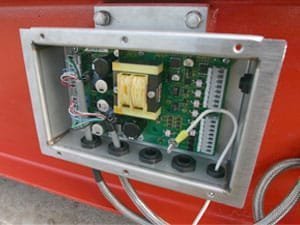
Purpose
- Signal Summation: Combines electrical signals from multiple load cells installed in the weighbridge platform.
- Load Distribution: Balances the signals from load cells to ensure accurate weight readings even when the load is unevenly distributed.
- Diagnostics: Helps identify issues with specific load cells by providing a convenient connection point for troubleshooting.
Components
- PCB (Printed Circuit Board): Houses the connections and summation circuitry for the load cells.
- Trimmer Potentiometers: Adjust individual load cell outputs for calibration and balancing.
- Terminal Blocks: Secure the connections of load cells and the output cable to the weighbridge indicator.
- Enclosure: Protects the components from environmental factors like dust, moisture, and temperature changes. Common materials include stainless steel, aluminum, or durable plastic.
- Seal/Ingress Protection: Ensures the box is waterproof and dustproof, adhering to IP65 or IP67 standards for harsh conditions.