

Industrial Weighing Scale With Printer: A Complete Factory Guide
An industrial weighing scale with printer is not just a weighing machine with a printer attached. In a modern factory, it can become a controlled production point for weight capture, barcode labels, inventory, check weighing, dispatch, cloud reporting and ERP integration.
Factories use weighing scales in very different environments. One company may weigh 25 kg cartons. Another may weigh 300 kg aluminium bundles. A third may weigh flexible-packaging rolls, metal coils, bags, foam blocks or pallets.
That means the correct industrial weighing scale cannot be selected from a single specification such as “500 kg capacity.” A proper factory specification should consider the complete process.
If you are already evaluating the commercial system, see the Punit Instrument Pvt. Ltd. Industrial Weighing Scale With Printer.
1. What Is an Industrial Weighing Scale With Printer?
An industrial weighing scale with printer combines a weighing platform, indicator or touchscreen, printer and software so the actual product weight can be captured and printed as part of a controlled transaction.
Depending on the application, the printed output can be a simple weight receipt, adhesive barcode label, QR-code product label, batch label, roll/coil/bundle label, accepted check-weighing label or dispatch document.
2. Industrial vs Retail Weighing Scale With Printer
| Requirement | Retail / Basic Printing Scale | Industrial Weighing Scale With Printer |
|---|---|---|
| Primary use | Billing or simple weight slip | Manufacturing, warehouse, production, packing |
| Platform | Small / compact | Bench, platform, floor or custom |
| Product master | Basic | Advanced / configurable |
| Barcode / QR | Limited | Custom industrial labels |
| Inventory | Basic or none | Barcode-wise inventory possible |
| Check weighing | Usually limited | UNDER / OK / OVER possible |
| Cloud reports | Limited | Centralized reporting possible |
| ERP / SAP | Rare | Integration can be evaluated |
3. Start With the Product Being Weighed
Before choosing capacity or accuracy, define the physical product: box, bag, roll, coil, bundle, pallet or loose material. Measure its footprint, understand how it is loaded, and consider whether the environment is dry, wet, dusty or corrosive.
4. Choosing the Right Capacity
Capacity should be selected for the real operating envelope, not only the average product. Consider maximum normal load, occasional load, tare of containers/pallets, future product changes and loading conditions.
5. Capacity and Readability Are Not the Same Thing
The correct specification should consider maximum capacity, display division/readability, required process tolerance, natural product variation and repeatability. If a small missing item must be detected inside a heavy carton, the scale must be selected around the smallest meaningful variation—not just the maximum load.
6. Choose the Correct Platform Size
7. Mild Steel vs Stainless Steel Construction
Mild steel suits many general engineering, metal and warehouse applications. Stainless steel is commonly preferred in pharma, food, chemical, wet, corrosive and hygiene-sensitive areas. Final material selection should follow the environment and cleaning requirement.
8. Load Cells and Industrial Platform Design
Industrial platform performance depends on load distribution, platform dimensions, off-centre loading, floor condition, mechanical shock, cable protection and maintenance access. Punit Instrument Pvt. Ltd. treats the platform and load-cell arrangement as part of the complete weighing system.
9. Indicator Communication: Foundation of Digital Weight Capture
To use weighing data in software, the indicator needs a usable output. Common possibilities include RS-232, USB, Bluetooth, Ethernet and supported serial/network protocols. If you already own a scale, see How to Print Real-Time Weight and Barcode From an Existing Weighing Scale.
10. Watch an Industrial Weighing Scale With Printer Working
All-in-One Industrial Weighing Scale With Printer
Live stable weight capture, label printing, barcode/QR, software and inventory-ready transactions.
Industrial Check Weighing + Tower Light
A factory workflow where accepted label printing can depend on the configured weight range.
11. Receipt Printer vs Barcode Label Printer
| Requirement | Receipt Printer | Barcode Label Printer |
|---|---|---|
| Simple weight slip | Excellent | Possible |
| Adhesive label | No | Yes |
| Barcode / QR | Limited | Recommended |
| Product stays identified | No | Yes |
| Inventory scanning | Limited | Recommended |
| Roll / coil / bundle traceability | Limited | Excellent |
For a simpler use case, see the Punit Instrument Pvt. Ltd. Receipt Printing Platform Weighing Scale.
12. Direct Thermal vs Thermal Transfer
Direct thermal suits many shorter-life labels. Thermal transfer uses a ribbon and is usually considered when labels need better durability during handling, storage and transport. Label stock, adhesive, ribbon, temperature and environment should be selected together.
13. Touchscreen vs Button-Operated Industrial Scale
A button-operated system can be enough for limited products and fixed label formats. A touchscreen is more suitable for product/customer/order selection, dynamic fields, inventory, check weighing, dispatch, cloud reports, permissions and ERP integration.
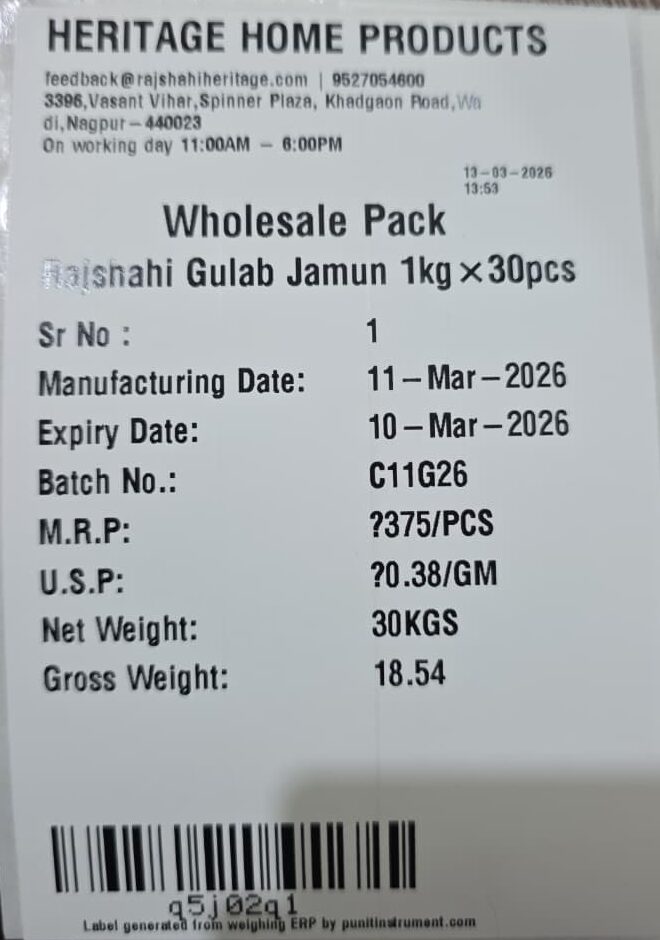
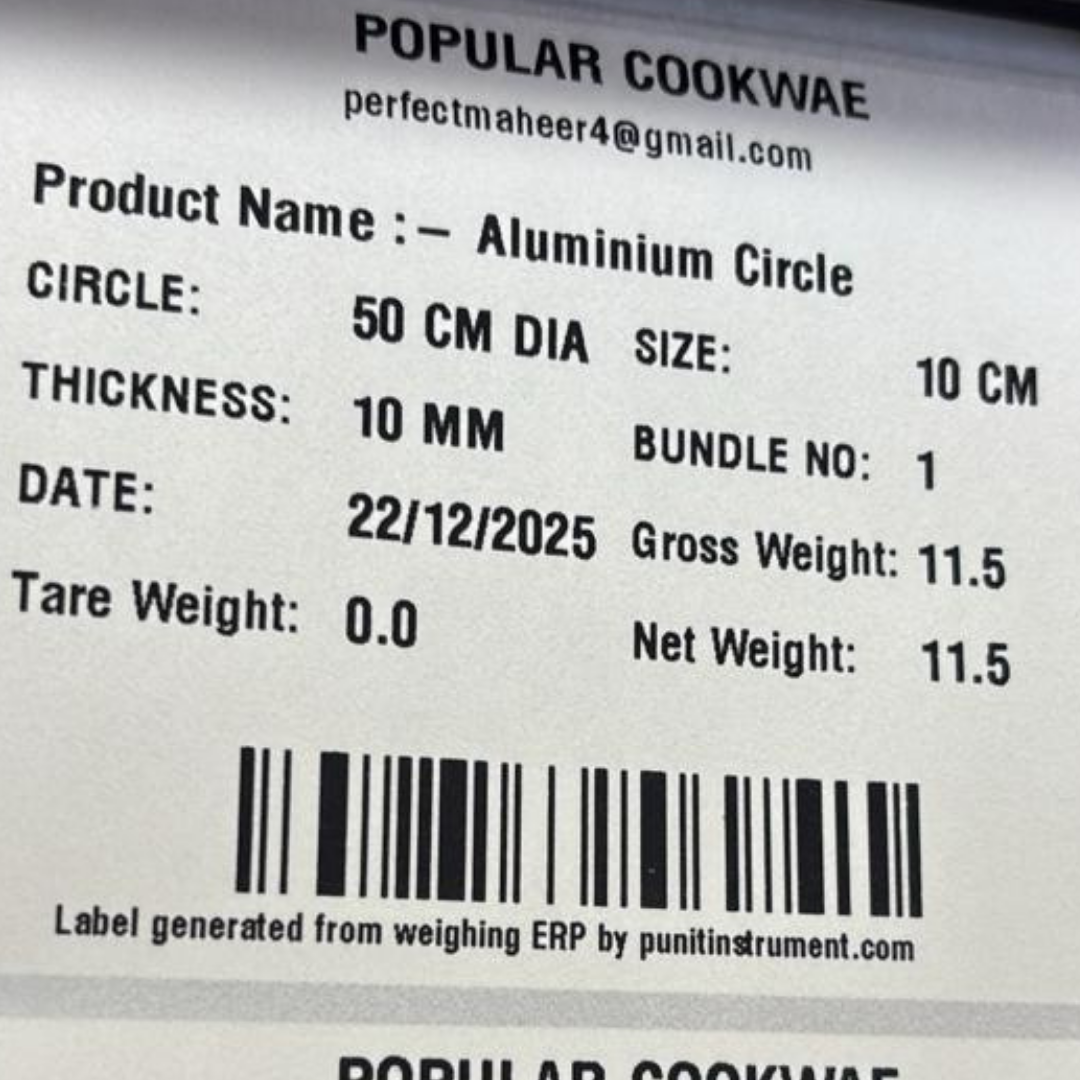
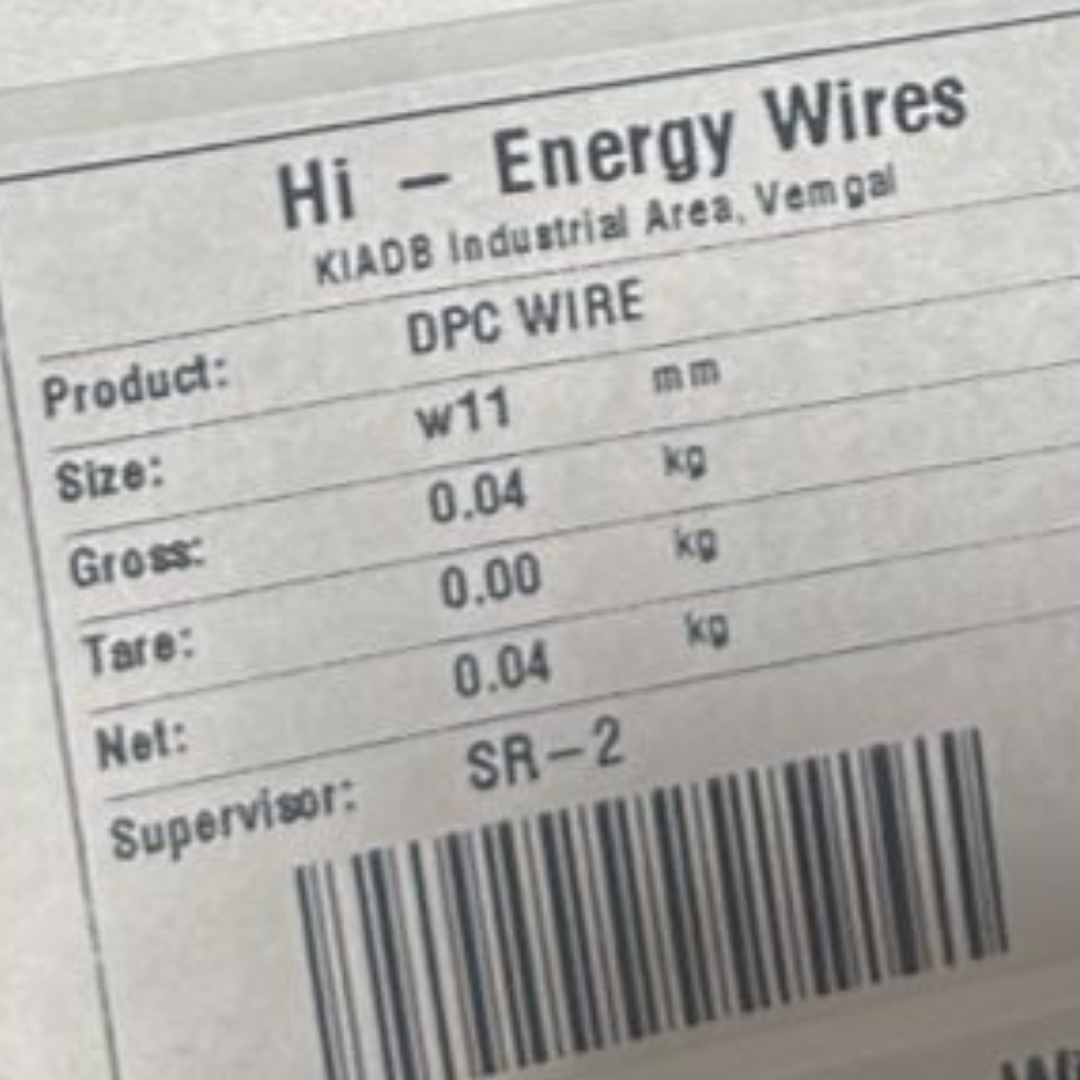
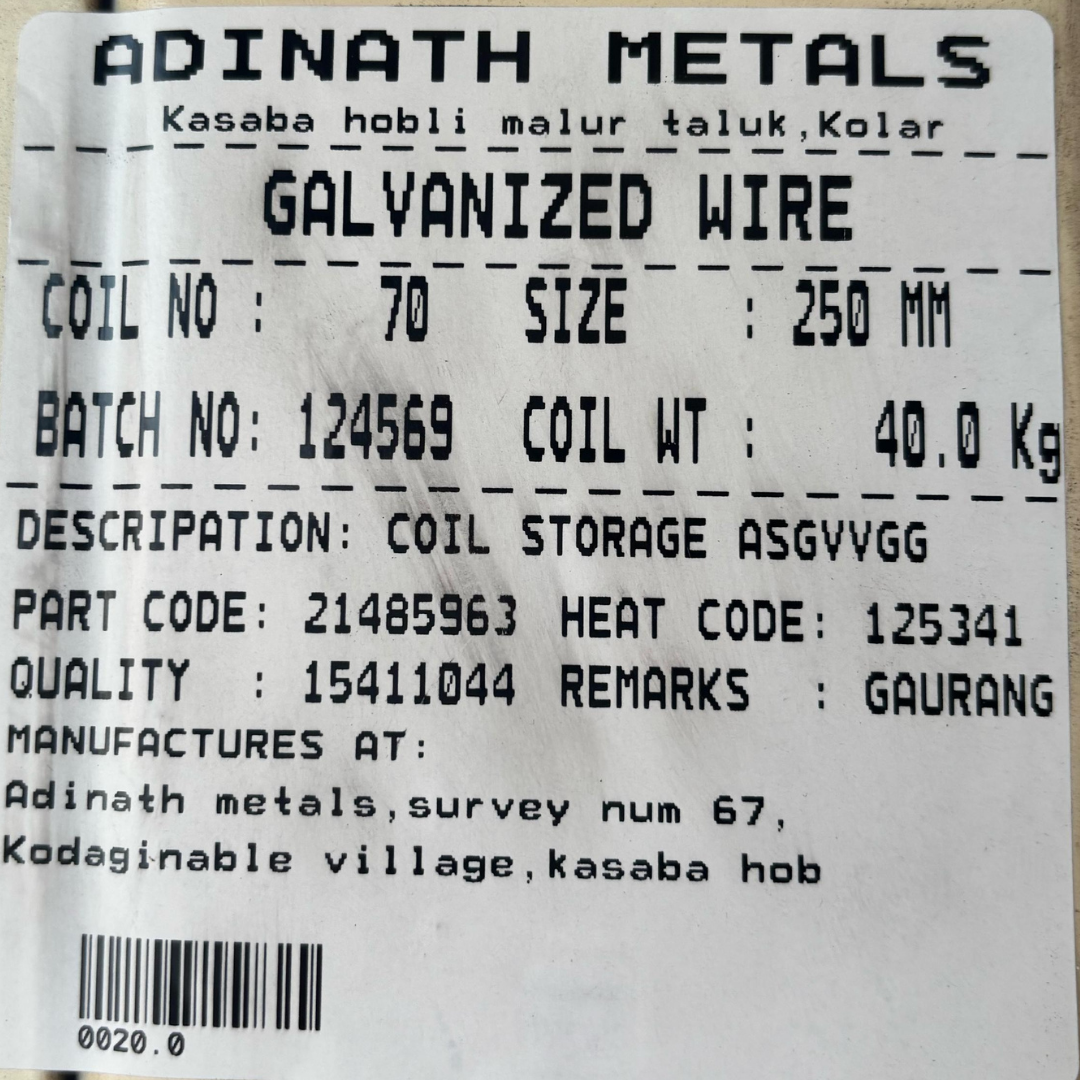
14. What Can an Industrial Label Contain?
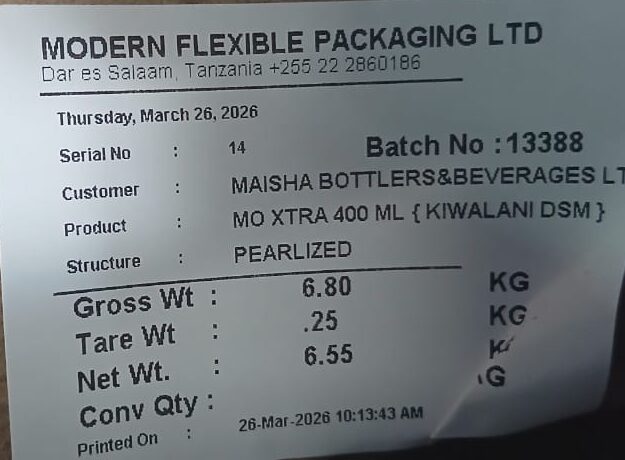
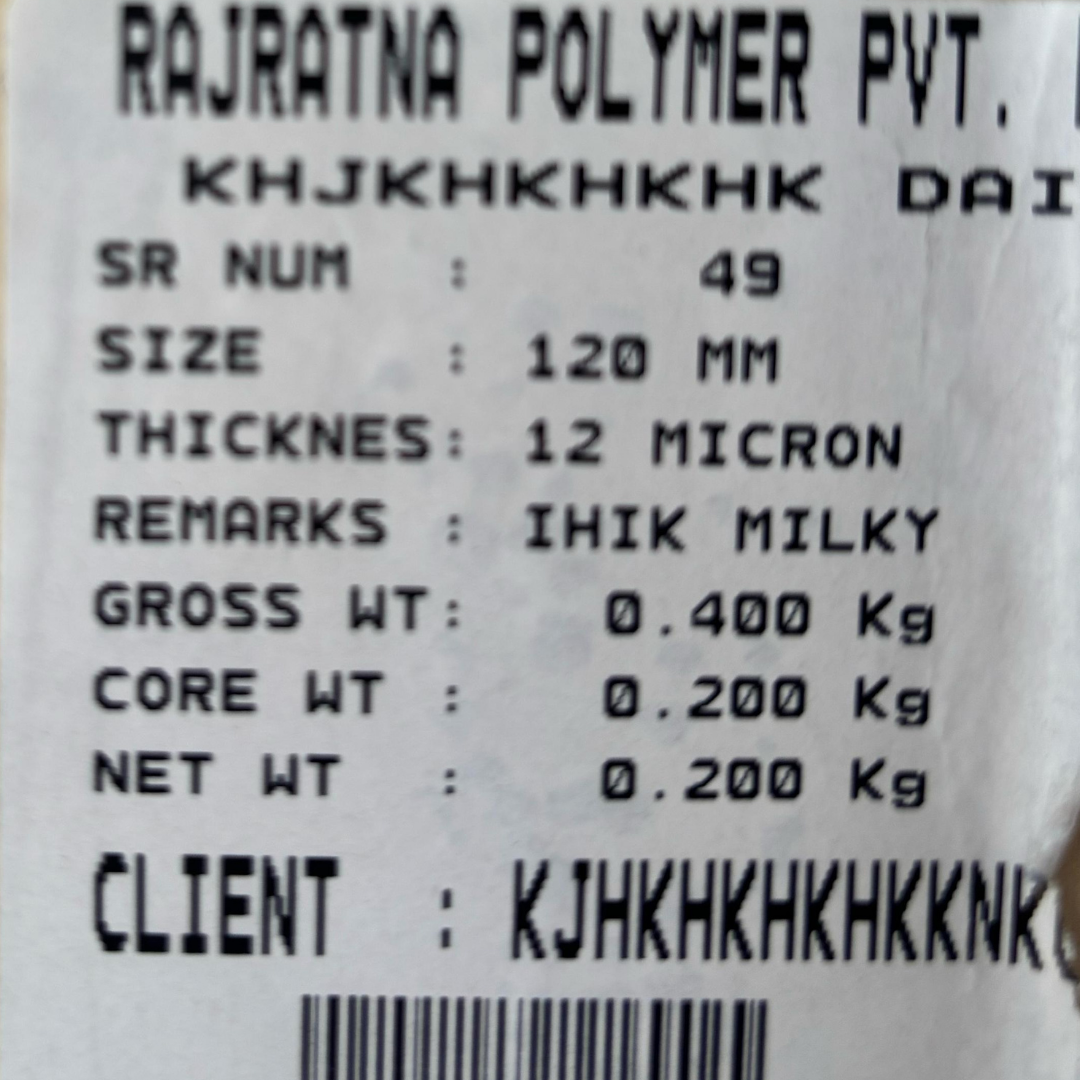
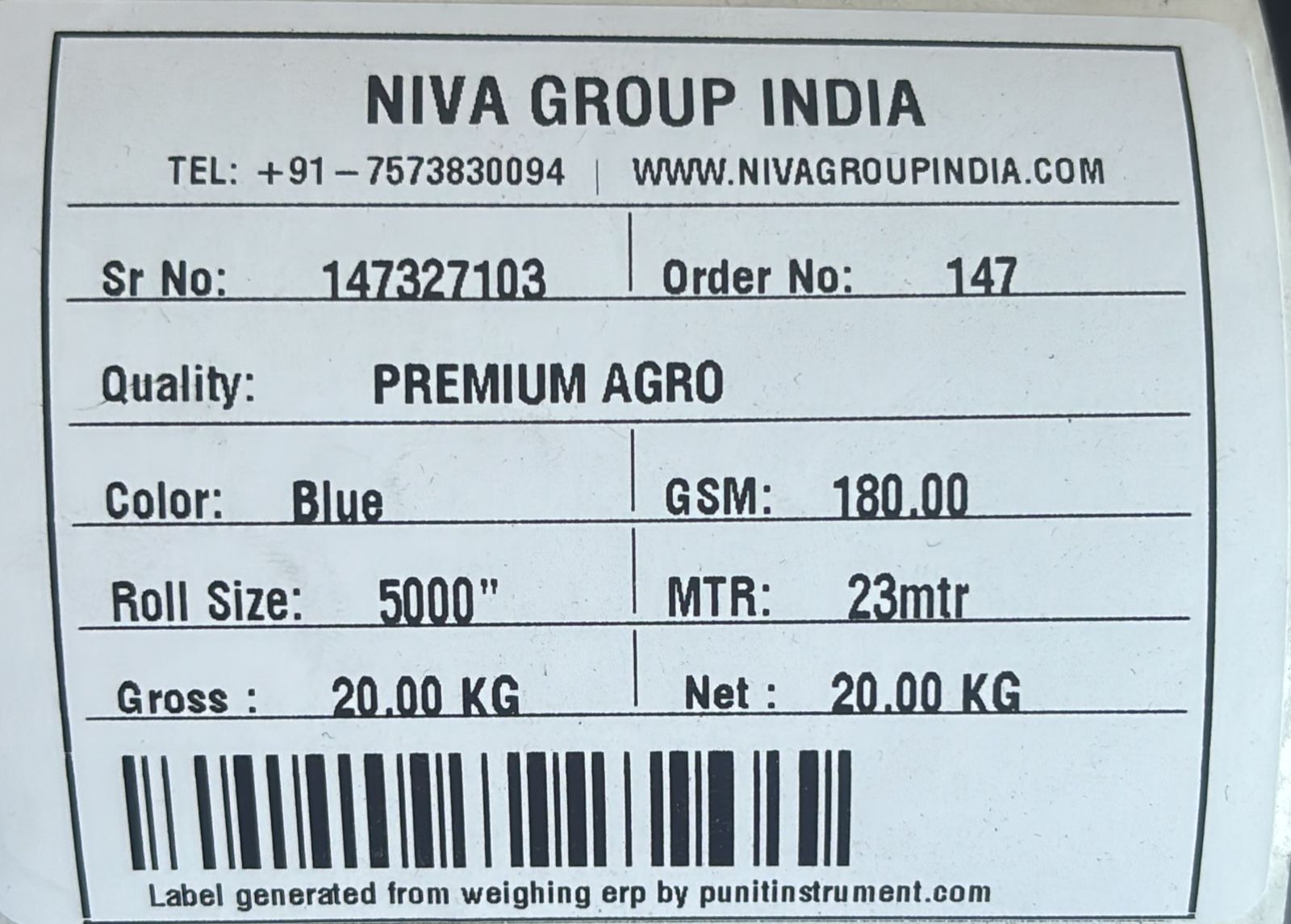
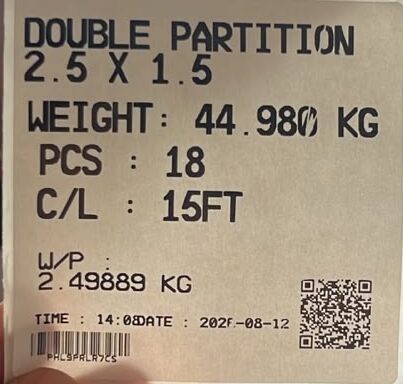
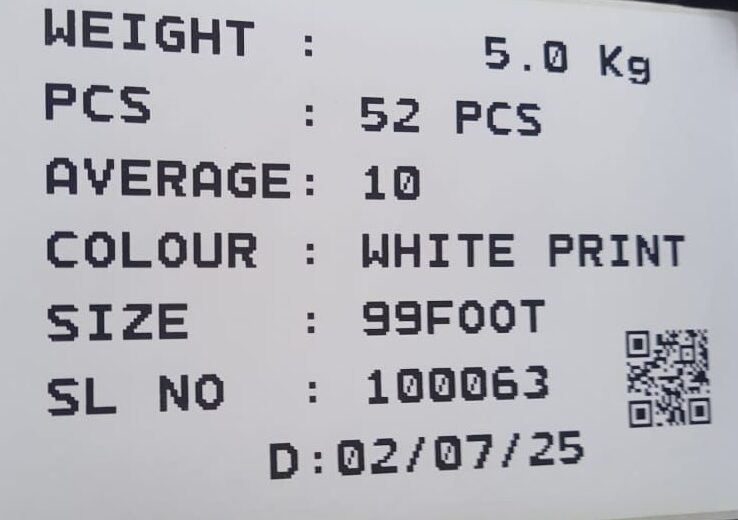
Punit Instrument Pvt. Ltd. can configure labels with company logo, product, product code, customer, order, batch/lot, gross/tare/net, pieces/rolls/bags, cut length, width, diameter, micron, thickness, GSM, colour, MFG/expiry, barcode, QR code, date/time, operator and other custom fields.
15. Real Industrial Label Examples
16. Gross, Tare and Net Weight in Industrial Processes
Gross weight is material plus container/packaging, tare is the container/packaging weight, and net is the actual material weight. Punit Instrument Pvt. Ltd. software can capture, calculate, print and store these values according to the configured workflow.
17. KG + PCS, Rolls, Bags or Coils
Industrial inventory is often maintained in more than one unit. Examples include aluminium KG + PCS, flexible packaging KG + rolls, polymer KG + bags and wire KG + coils.
For a deeper inventory explanation, see How Punit Instrument Pvt. Ltd. Manages Inventory With Direct Weighing.
18. Inventory Management With an Industrial Weighing Scale
If every accepted physical item should become stock, see the Punit Instrument Pvt. Ltd. Weighing Scale With Printer & Inventory Management.
19. Check Weighing and Conditional Printing
A check-weighing workflow can use target, minimum and maximum weight, UNDER/OK/OVER status, tower light, buzzer, conditional accepted-label printing and accepted/rejected records.
20. Static vs Dynamic Checkweighing
Static check weighing: the operator places the package on the scale. Dynamic checkweighing: the product moves automatically over a conveyor and may be automatically rejected. These are different engineering systems.
21. Cloud, Offline or Hybrid Operation
Offline operation keeps data local. Cloud enables centralized reporting. Hybrid can allow weighing and printing to continue locally during temporary internet interruption and synchronize later.
22. Multi-Scale Centralized Monitoring
23. ERP / SAP Integration
Punit Instrument Pvt. Ltd. can evaluate Punit ERP, SAP and other ERP integration depending on the customer’s API, middleware, network and approved technical scope. Data can include product/material master, customer, orders, batches, actual weights, barcode/QR, pieces/rolls, inventory inward/outward, dispatch and packing-list data.
Read the Weighing Scale ERP & SAP Integration Guide.
24. Real Case Study: Modern Flexible Packaging Ltd., Tanzania
Modern Flexible Packaging Ltd. moved from manual roll-weight records and stock handling toward a connected Punit Instrument Pvt. Ltd. weighing, labelling and inventory workflow. Rolls can be weighed, labelled, added to barcode-wise inventory and scanned during dispatch.
25. Real Case Study: SPM Extrusion Pvt. Ltd.
SPM Extrusion Pvt. Ltd. uses Punit Instrument Pvt. Ltd. for aluminium section weighing and identification. The workflow can include section, cut length, pieces, actual bundle weight, average piece weight, barcode, QR, inventory and dispatch.
26. Real Factory Videos
FMCG Client Case Study & Testimonial
SPM Extrusion Pvt. Ltd. — Aluminium
Aluminium / Wire Industry — Live Factory
FMCG — JK Masale
27. Industry-by-Industry Selection Guide
28. Installation Environment Matters
Review floor level and vibration, dust, water, temperature, electrical supply, printer location, network availability, operator ergonomics, forklift/trolley traffic and mechanical impact risk.
29. Calibration and Legal Metrology Considerations
Industrial weighing applications should consider calibration and applicable Legal Metrology requirements according to the country and use case, especially where the instrument is used for trade.
30. Maintenance and Consumables
- Platform cleaning
- Load-cell and cable protection
- Indicator inspection
- Calibration checks
- Printer-head cleaning
- Label and ribbon stock
- Scanner condition
- Touchscreen protection
- Software backup and user management
31. Buyer Checklist Before Requesting a Quotation
- Product type
- Minimum / maximum weight
- Required readability
- Platform dimensions
- MS or SS
- Loading method
- Receipt or barcode label
- Label size
- Required printed fields
- Gross / tare / net
- Barcode / QR
- Pieces / rolls / bags
- Inventory
- Check weighing
- Packing list
- Cloud
- Number of scales
- Existing scale details
- ERP / SAP
- Factory environment
- Offline requirement
32. Frequently Asked Questions
What is an industrial weighing scale with printer?
It is a factory-oriented weighing system that captures weight and prints a receipt or label, often with product, barcode, QR, batch and other manufacturing data.
Can an industrial scale print barcode labels?
Yes. Punit Instrument Pvt. Ltd. can configure industrial barcode and QR label printing according to the application.
Can it maintain inventory?
Yes. With the inventory module, accepted weighments can become barcode-wise stock records.
Can inventory be maintained in KG and PCS?
Yes. Punit Instrument Pvt. Ltd. can support combinations such as KG + PCS, KG + rolls and KG + bags according to the workflow.
Can the scale block printing if weight is wrong?
Yes. In a check-weighing configuration, accepted label printing can depend on minimum and maximum limits.
Can multiple industrial scales connect to one dashboard?
Yes. Compatible weighing stations can connect to a centralized Punit ERP or cloud environment.
Can an existing weighing scale be connected to software?
Possibly. Compatibility depends on the indicator and communication protocol.
Can an industrial weighing scale integrate with SAP?
Yes. Punit Instrument Pvt. Ltd. can evaluate SAP / ERP integration depending on the customer’s APIs, middleware and approved technical architecture.
33. Related Punit Instrument Pvt. Ltd. Resources
Need an Industrial Weighing Scale With Printer for Your Factory?
Share your product, maximum weight, required readability, platform dimensions, label format, inventory process, number of weighing stations and ERP requirement with Punit Instrument Pvt. Ltd..
Explore Industrial Weighing Scale With Printer Discuss Your Factory Requirement