
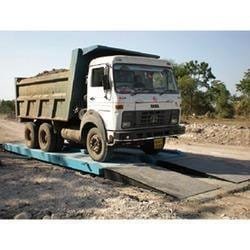
The Truth About Accuracy, Efficiency, and Profit in Modern Logistics
In most industrial operations from cement and steel to ports and mining weighing vehicles is a daily necessity.
And for decades, this process was handled manually: operators writing entries, printing paper tickets, and relying on judgment calls.
But as operations scale, manual weighbridge management simply cannot keep up.
That’s why unmanned weighbridge software has become the new benchmark for precision, transparency, and automation.
This guide breaks down the key differences between manual and unmanned weighbridge systems, showing why upgrading isn’t a luxury it’s a necessity.
What Is Manual Weighbridge Software?
A manual weighbridge system depends on human operators to record truck weights, issue tickets, and manage entries.
While simple to use, it introduces delays and human error at every step.
Typical Process in a Manual Weighbridge:
- Truck enters weighbridge.
- Operator records vehicle number manually.
- Weight is read on the indicator and entered into a computer or register.
- Paper ticket is printed and handed to the driver.
- Data is later exported or entered into an ERP manually.
This process might seem straightforward but it’s inefficient and error-prone when hundreds of vehicles are weighed daily.
What Is Unmanned Weighbridge Software?
Unmanned weighbridge software automates the entire weighing process using sensors, RFID, ANPR cameras, and boom barriers eliminating the need for manual intervention.
How It Works:
- Each truck is tagged with an RFID card linked to vehicle and driver data.
- When the truck arrives, sensors and cameras identify it automatically.
- The barrier opens, and the system records gross or tare weight without operator input.
- A digital ticket is generated instantly, stored in the database, and optionally sent to the driver via SMS or email.
- The system syncs data with ERP or inventory modules for automatic reconciliation.
Others software: unmanned weighbridge software, RFID weighbridge system, automatic truck weighing software, ANPR weighbridge automation, fully automatic weighbridge system, IoT weighbridge, cloud-based unmanned weighbridge.
Key Differences: Unmanned vs Manual Weighbridge
| Feature | Manual Weighbridge | Unmanned Weighbridge |
|---|---|---|
| Operation | Requires operator at site | Fully automatic, no operator |
| Vehicle Identification | Manual entry by operator | RFID tag or ANPR camera |
| Data Entry | Manual input | Auto data capture |
| Ticket Generation | Paper-based | Digital & cloud-synced |
| Security | Prone to fraud & manipulation | Tamper-proof, audit trail |
| Speed | Slow, human-dependent | Fast & continuous 24/7 |
| Integration | Manual data export to ERP | Real-time ERP & inventory sync |
| Manpower Cost | High | Zero recurring labour cost |
| Accuracy | Subject to human error | 100% digital precision |
| ROI | Low, recurring inefficiency | High, payback within months |
Hidden Costs of Manual Weighbridge Operations
Manual weighbridges might seem cheaper upfront but they create long-term financial and operational losses:
- Human Error and Fraud – Wrong data entries, duplicate tickets, or unauthorized vehicle weighing.
- Delays and Downtime – Operators can only handle one vehicle at a time.
- Inconsistent Reporting – No real-time data for management.
- Limited Traceability – Missing records during audits or disputes.
- Increased Overheads – Higher manpower costs and supervision.
In industries like logistics, steel, or cement, even a 1% error in weight data can mean lakhs in revenue leakage every year.
Other weighbridge operation Costs : manual weighbridge limitations, weighbridge data error, fraud in weighbridge operation, manual vs automated weighing, operator-based truck weighing.
The Advantages of Unmanned Weighbridge Automation
1. Zero Human Error
Every reading is captured directly from the digital indicator, eliminating misreporting and manipulation.
2. 24/7 Operation
With RFID and camera-based control, vehicles can be weighed anytime without staffing constraints.
3. Real-Time Data Integration
All weighment data syncs instantly with ERP and inventory systems for live tracking.
4. Security and Auditability
Each transaction is linked to CCTV footage, timestamp, and RFID ID creating a complete digital audit trail.
5. Reduced Turnaround Time
Weighing time drops from several minutes to under 60 seconds, significantly improving logistics flow.
6. Instant Reporting and Analytics
Management can access cloud dashboards showing material movement, weighment frequency, and variance analysis.
7. ROI and Cost Savings
Elimination of manual labour and errors results in a fast return on investment often within months.
ERP and Cloud Integration: The Core of Modern Weighbridge Software
The most powerful unmanned weighbridge systems don’t just weigh trucks they integrate deeply into business operations.
ERP Integration
Every weighment automatically updates:
- Inward and outward material logs.
- Purchase and sales records.
- Stock and dispatch reconciliation.
This integration eliminates redundant entries and ensures real-time visibility across departments.
Cloud-Based Dashboard
Centralised dashboards allow managers to:
- Monitor multiple weighbridges.
- View live transactions and queue status.
- Access historical reports and audit logs.
Other weighbridge operation: ERP weighbridge software, cloud weighbridge dashboard, real-time weighbridge monitoring, multi-weighbridge control, IoT weighbridge connectivity.
Which System Is Right for Your Business?
The choice between manual and unmanned weighbridge software depends on scale, budget, and compliance requirements.
| Business Type | Recommended System | Why |
|---|---|---|
| Small factories, single-site operations | Manual or semi-automatic weighbridge software | Cost-effective for low volumes |
| Mid-sized manufacturing or logistics hubs | ERP-integrated weighbridge software | Improves coordination between departments |
| Large industrial plants, ports, or mines | Unmanned weighbridge software | Maximum efficiency, zero fraud, 24/7 operation |
General Rule
If you weigh fewer than 20 vehicles per day, a semi-automatic system may suffice.
If you handle 50+ vehicles per day or multiple locations, unmanned automation is non-negotiable.
Other options: choosing weighbridge software, best weighbridge system India, weighbridge automation for factories, ERP weighbridge selection guide, unmanned weighbridge implementation.
Transitioning from Manual to Unmanned Weighbridge
- Audit Current Process – Identify bottlenecks and error points.
- Upgrade Hardware – Ensure load cells and indicators support automation.
- Implement RFID or ANPR – Enable automatic identification.
- Deploy Software – Integrate ERP, dispatch, and ticketing modules.
- Train Staff – Teach system monitoring and exception handling.
- Monitor and Optimise – Track performance metrics post-implementation.
With the right planning, even legacy weighbridges can be transformed into fully automated systems within weeks.
Other weighbridge operations: weighbridge automation implementation, RFID weighbridge setup, how to automate weighbridge, upgrade manual weighbridge to unmanned.
Future of Weighbridge Management
The next generation of smart weighbridge systems will use AI and IoT to predict anomalies, verify authenticity, and generate actionable insights.
Emerging trends include:
- AI-based fraud detection through pattern recognition.
- Blockchain-secured weighment records for tamper-proof storage.
- Mobile weighbridge apps for instant approvals and alerts.
- Predictive maintenance for load cells and electronics.
Automation is no longer an upgrade it’s a competitive necessity.
Conclusion
Manual weighbridge systems rely on human accuracy, which is inherently inconsistent. Unmanned weighbridge software delivers reliability, speed, and transparency every single time. For industries handling bulk materials or high daily traffic, automation eliminates human dependency, reduces costs, and guarantees compliance.
Choosing unmanned weighbridge automation is not about technology; it’s about trust, control, and measurable profit. It’s the future of industrial weighing and the smartest investment for any growing enterprise.
And also check this Weighing Scale with Printer | Real-Time Weight With Label Printing Demo for Factories & Warehouses
Frequently Asked Questions
It’s a fully automated system that performs vehicle weighing without human intervention using RFID, cameras, and sensors.
Manual systems require an operator to record data, while unmanned systems capture, verify, and store data automatically with zero human input.
It eliminates human errors and manipulations by capturing readings directly from load cells and verifying vehicle identity via RFID or ANPR.
Yes, modular systems can be scaled for smaller operations with limited daily traffic.
Yes, leading solutions provide direct integration with ERP, inventory, and dispatch management modules.
It uses encrypted connections, user authentication, and automatic backups to ensure complete data security.
Mining, cement, steel, logistics, ports, agriculture, and waste management.
Most companies recover investment within 6–12 months due to saved labour, faster turnaround, and zero loss through errors.