
Crane Scale Software – The New Revolution in Crane Scales & Why You Need One
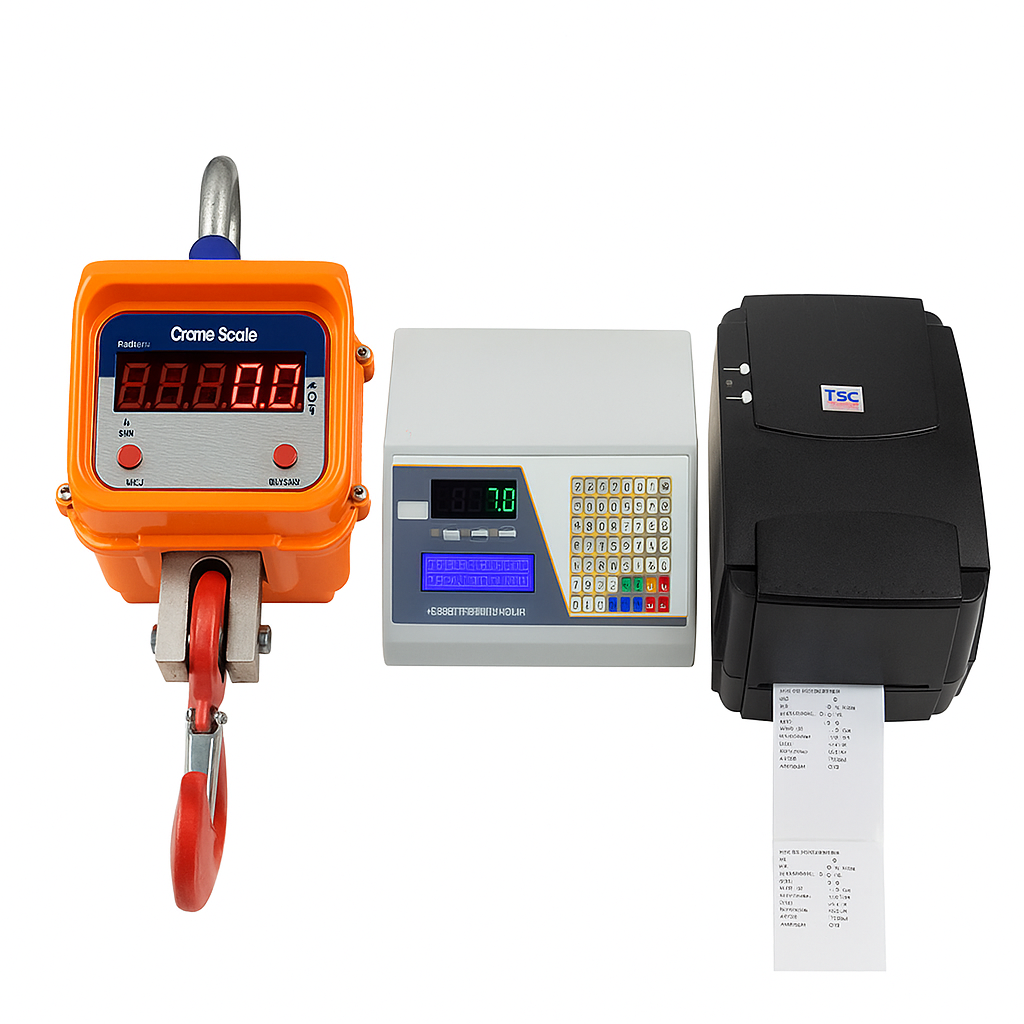
In heavy-duty industrial operations, the crane scale has long been a critical tool. It allows you to weigh suspended loads safely and accurately.
But now a new wave is transforming this tool: crane scale software. This software turns a simple hook-weighing device into a data-driven, connected instrument that ties into your broader operations, inventory, ERP systems and workflows.
If you run manufacturing, steel, foundry, shipping, recycling or any business using overhead cranes, this blog explains what crane scale software is, how it works, why it’s becoming essential, and what to look for.
What Is Crane Scale Software?
Crane scale software is the digital system that overlays the traditional crane scale hardware. The hardware is the hanging scale hooked to the crane; the software captures the weight reading, logs it, connects it with identifiers (batch, load, hook ID, operator), and integrates with other systems (inventory, ERP, reporting).
It isn’t simply showing a weight on a display. It’s about making that weight meaningful part of your data ecosystem. It can:
- capture suspended load weights in real time
- automatically record the operator, time, hook or shackle ID
- transmit the data via USB, RS-232, Bluetooth or WiFi
- integrate into your ERP, inventory management, dispatch or quality systems
- help you monitor load trends, detect overloads, track load history
- support automation, remote monitoring and traceability
In short, crane scale software gives you visibility, control, and integration features that older analog or standalone digital crane scales cannot fully deliver.
Why Crane Scale Software Is the New Revolution
1. From Stand-alone Scale to Connected Device
Older crane scales may display weight and maybe print a ticket. But today’s industries demand much more: real-time data, integration with business systems, automation. Crane scale software evolves the scale into a connected device part of your production, inventory and safety network.
2. Greater Accuracy, Traceability, Safety
Digital crane scales already improved accuracy and safety by hanging loads rather than moving them to floor scales. Crane scale software extends those benefits by logging data, associating weights with batches or orders, enabling audit trails, and reducing human error. (ref)
3. Data for Decision Making
When you weigh thousands of loads, each weight is a data point. Software turns these into trends: which hook is used most, which loads are nearing capacity, which operator patterns show error, which parts of operation are bottlenecks. That kind of insight wasn’t possible with analog or basic digital scales.
4. Integration with ERP, Inventory, Quality & Safety
Industrial operations today don’t run in silos. A crane scale weight might feed into purchase cost, stock levels, job costing, or quality certification. Software makes that possible. Without software, the crane scale remains isolated.
5. Compliance, Audit & Accountability
Regulated industries or heavy-duty operations require traceable records: who weighed what, when, with what hook, what was the load ID, was it within safe capacity. Crane scale software can log all of this. Standard crane scales cannot.
6. Future-Proofing Your Operation
As industries move toward Industry 4.0, IoT and smart factories, your crane scale is one of many devices that will need connectivity. Having software in place today means you are ready for more automation, remote monitoring, predictive maintenance and data analytics tomorrow.
Why You Need Crane Scale Software Key Benefits
- Accuracy & consistency: Software helps enforce correct use, avoid manual errors, track overload events.
- Reduced risk and improved safety: Real-time weight capture means you can prevent overloads, detect misuse and link weight records to operator and equipment.
- Operational efficiency: The software automates what used to be manual weight-logging, ticket printing, Excel entry or paper records.
- Full traceability: Each weight is logged with context (hook, operator, time, batch). If a product is defective, you can trace back the exact load, hook used, operator and time.
- Better inventory & cost control: Weight data ties directly to material movement, cost centres, job orders and inventory levels.
- Data insights and reporting: You can analyse patterns, detect inefficiencies and optimise load handling, crane usage, and maintenance.
- Integration capability: Connects scale data to ERP, MES, QC, inventory systems turning the scale into a smart node in your enterprise system.
How Crane Scale Software Works Key Components
- Crane scale hardware: The hanging scale with load cell, hook/shackle, indicator or remote display.
- Communications interface: The scale must have output (RS-232, USB, Bluetooth, WiFi) sending data to software.
- Software module: Either local PC software, or cloud/edge application, which captures each weighment event and stores data.
- Identifiers and context: Operators select or the software auto-captures load ID, job ID, hook/shackle ID, operator ID, date/time.
- Integration & connectivity: Data flows from software to other systems: inventory, ERP, maintenance, reporting dashboards.
- Reporting & analytics: Dashboard or reports show loads by job, operator, hook; trends, overload events, maintenance alerts.
- Optional automation: Auto-ticket printing, wireless remote display, wireless data collection, mobile interface, alerts.
Which Industries Benefit Most from Crane Scale Software
- Steel & metal processing – suspending heavy loads for weighing, tracking scrap or ingots.
- Foundries & casting – measuring molten metal, ladles, heavy rigging safely.
- Warehousing & logistics – using overhead cranes to move palletised loads, containers.
- Shipping & ports – suspending containers or heavy cargo and linking weight to bills.
- Recycling & scrap yards – tracking variable shaped loads, linking to billing.
- Heavy manufacturing – automotive, aerospace, where loads are awkward shapes and frequent lifts.
Sources highlight that crane scales are especially valuable when loads are irregular, heavy and space is premium. (ref)
Key Features to Look For in Crane Scale Software
| Feature | Description |
|---|---|
| Live weighment logging | Captures each weight with timestamp, hook ID, operator. |
| Connectivity & data output | RS-232/USB/Bluetooth/WiFi for data transmission. |
| Integration with ERP/MES | Ability to push weight data into inventory, costing, dispatch. |
| Operator and hook tracking | Associates weight with operator, hook/shackle or crane. |
| Overload alerts & safety controls | Software can trigger alerts if capacity is exceeded. |
| Ticket and label printing | Optional printout with weight, job ID, operator for record. |
| Analytics & dashboards | Trends, usage patterns, crane load stats over time. |
| Database & archive | Secure storage of all weighments for audit/tracing. |
| Scalability & multi-scale support | For setups with many cranes or lifting points. |
Common Mistakes to Avoid When Implementing Crane Scale Software
- Buying a scale without data output interface – no software connection.
- Choosing software isolated from your ERP/inventory systems – loses value.
- Ignoring hook/shackle, crane compatibility or head-room loss when adding scale hardware.
- Overlooking calibration and certification requirements for industrial weights.
- Not training operators or updating processes – software alone won’t fix process issues.
- Rushing installation without defining how data will be used downstream (reporting, inventory, costing).
Future Trends: Smarter Crane Scale Software
- IoTenabled crane scales sending live data to central server.
- Predictive maintenance: software detecting load cell drift, abnormal hook usage.
- Cloud dashboards accessible across site or globally.
- Mobile apps for crane operators and supervisors.
- Integration with full factory automation systems, linking crane load with job costing, production scheduling.
- AI/ML analysis of load patterns for safety and optimization.
Conclusion
Industrial crane scale is mature, proven and essential. But in the digital era, hardware alone is no longer enough.
Crane scale software is the next revolution turning each weight into a data point, each crane lift into an auditable event, and each load into an actionable insight.
If you are still operating with standalone crane scales and paper records or disconnected displays, you’re missing out on significant value: efficiency, traceability, safety and integration. Making the jump to crane scale software means you’re not only weighing loads you’re managing data, controlling cost, improving safety and connecting your operations.
In a world that increasingly demands real-time visibility, traceability and integration, the right crane scale software isn’t optional it’s critical.
FAQs
It is the software component that captures and manages weight data from a hanging crane scale, integrates with business systems and enables traceability, safety and analytics.
Yes. Modern crane scale software is designed to integrate with ERP, MES or inventory management systems to ensure that each weighment impacts downstream operations.
The benefits include data capture, traceability, audit trails, integration, analytics, operator/hook tracking, overload alerts, efficiency improvements and future readiness.
Industries with heavy lifting operations or overhead cranes steel, foundry, warehousing, shipping, ports, logistics, scrap/recycling benefit most.
Connectivity (RS-232/USB/Bluetooth/Wi-Fi), ERP integration, operator/hook tracking, overload control, ticket/label printing, analytics dashboard, database storage and scalability.
